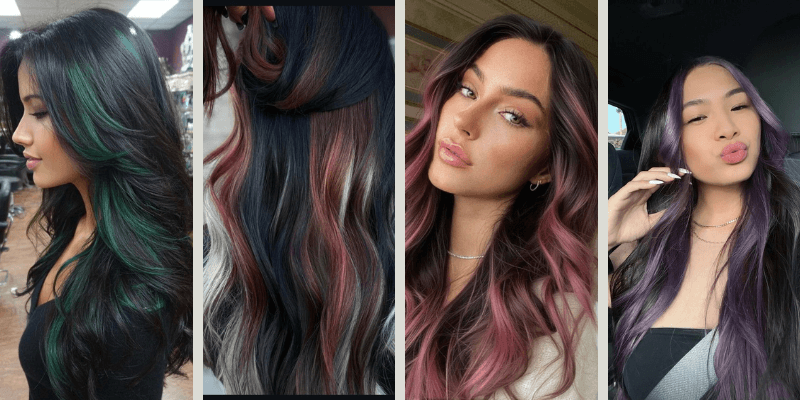
Blonde hair gets most of the attention in color inspiration content — and if you’ve spent any time on Pinterest or TikTok looking for vivid hair ideas as a brunette, you’ve probably noticed that. The boldest, most eye-catching looks seem to be filtered through a lighter base, which makes the whole thing feel a little out of reach for anyone working with dark hair.
The reality is more interesting than that. Brown and black hair carries a natural depth that lighter bases simply don’t have, and certain colors — cool blues, rich purples, jewel-toned teals — perform better against a dark background than they ever would on blonde. The contrast is sharper, the tones appear more saturated, and even a modest amount of color makes a clear visual impact.
The ideas below cover both ends of that spectrum, with enough detail on placement, tone selection, and upkeep to make an informed decision before booking an appointment.
Dark Brown Hair Pink Highlights
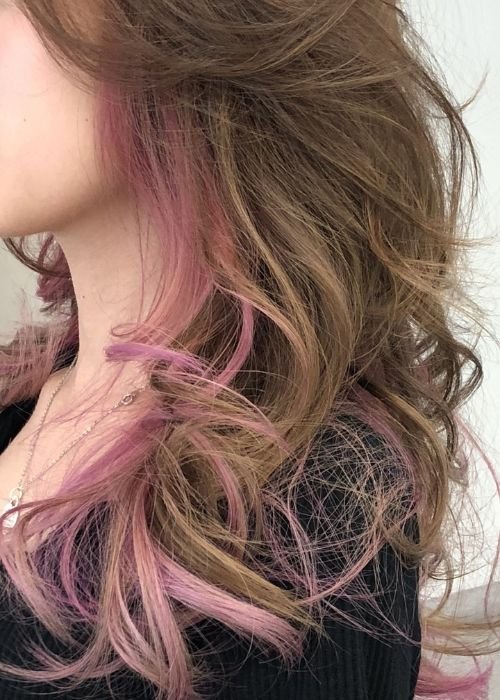
The range of what’s possible with pink highlights on dark brown hair is wider than most people expect. It spans from soft, barely-there rose tones blended into the mid-lengths, to saturated pink sections that make a clear, intentional statement — and every variation in between has its place depending on the desired result.
On the softer end, dusty rose or muted mauve blended into dark brown as babylights or face-framing highlights reads more as warmth and dimension than obvious color. It’s the kind of result that changes the overall feel of the hair without immediately signaling “I dyed it pink.” This version is also one of the better low-maintenance options in this category — dusty pink fades into blush and soft gold tones rather than going patchy or grey, which means the grow-out period still looks intentional.
Vivid hot pink placed in larger sections
particularly as a money piece framing the face — moves firmly into bold territory. High contrast against a dark brown base, unmistakably colorful, very much a deliberate choice. This version holds up well on shorter hair too. A pixie or bob with a vivid pink section at the front is actually one of the cleaner ways to execute this look, since the color stays visible and defined rather than getting lost in length.
One thing worth clarifying before booking: achieving a true bright pink on dark brown hair requires pre-lightening the sections first. Without that lift, pink pigment over dark brown reads as burgundy or deep red — still a beautiful result, but a different one. A colorist who works regularly with vivid color will be able to give a clear picture of what’s achievable from a given starting point.
Calico Hair
Calico hair takes its name from calico cats — the ones with that irregular three-toned coat of orange, black, and white. The hair version follows the same logic: multiple colors placed throughout in a way that looks organic rather than uniform. On brunettes, the classic execution uses the natural dark brown base as one of the tones, then adds copper or auburn sections alongside bright blonde pieces. All three coexist without any single tone dominating.
The dark strands thread through rather than being fully covered, which is what separates calico from a standard highlight or balayage. That contrast between the deep base, the warm copper, and the lighter blonde sections is where the dimension comes from — and it works particularly well on longer hair where the variation has room to move and layer.
Placement is intentionally irregular. Thicker sections in some areas, finer pieces in others, no strict pattern. A colorist experienced in creative color work will approach this freehand rather than following a set formula, which is what gives the finished result its character.
Upkeep is relatively manageable compared to other vivid techniques since the tones used are mostly natural-adjacent. Root growth blends more easily, and the multi-tonal nature of the look means it still looks intentional even as it grows out.
Teal Streaks in Brown Hair
Teal sits at the intersection of blue and green in a way that makes it particularly well-suited to brown hair. Most brown bases carry warm undertones — gold, amber, red — and teal’s cool, slightly green-leaning tone creates contrast against those warm notes without clashing. The two work together rather than competing, which is part of why this combination consistently delivers strong results.
The intensity of teal streaks in brown hair can be adjusted significantly depending on the look being targeted. A deep, muted teal blended into dark brown in fine sections creates a dimensional result that shifts between green and blue depending on the light source. In daylight it leans green; under artificial light it pulls bluer. This version registers as intentional and artistic rather than obviously vivid — one of the more sophisticated takes on cool hair color ideas for brunettes.
Fully saturated teal
A brighter, fully saturated teal moves into bolder territory. Larger sections placed through the mid-lengths and ends creates a high-contrast streaked effect that photographs exceptionally well. On shorter hair, even two or three well-placed sections of bright teal can define the entire look without needing to go further.
Teal does require consistent upkeep to stay looking its best. The blue component fades faster than the green, which means neglected teal can shift toward a dull grey-green over time. Sulfate-free shampoo, cold water rinses, and a blue-green color-depositing conditioner used every one to two weeks are the most effective tools for maintaining the tone between appointments.
Using a deep, rich color
A less obvious but equally effective approach is using a deep, rich color rather than a bright one — dark plum, deep forest green, or midnight blue placed underneath black hair. The contrast is subtler, but in certain lighting those sections catch and shift in a way that gives the overall color genuine depth and dimension. It’s one of the more underrated options in the fun dark hair color ideas category because it delivers an interesting result without requiring an overtly vivid commitment.
One practical consideration: black hair typically requires more pre-lightening than lighter brown bases to achieve accurate vivid results, particularly for anything warm-toned, neon, or pastel. Deep jewel tones and cool colors like navy or dark violet can sometimes be achieved with less lift, but a strand test and honest consultation before the appointment will prevent mismatched expectations.
Purple Streaks in Black Hair
Purple and black is a combination that has stayed relevant across decades of color trends, and the reason is straightforward: the pairing works consistently well across different skin tones, hair textures, and placement styles. Violet tones complement the cool depth of black hair in a way that feels natural rather than forced, which is why this remains one of the most requested looks in the vivid color category.
Deep purples
eggplant, wine, dark plum — are among the few vivid shades that can sometimes be achieved on black hair with minimal pre-lightening. Because the depth is built into the color itself, there’s no need for a pale base to make them read correctly. The result won’t reach neon-vivid intensity, but it will add richness and noticeable dimension in good lighting. For anyone with black hair who isn’t ready to commit to a bleach process, this is one of the more accessible entry points into color.
Brighter shades
lavender, lilac, true violet — do require pre-lightened sections to show up accurately. That said, purple is one of the most forgiving vivid colors during the fade process. Rather than turning grey or muddy, it typically mellows into softer mauve and pinkish tones, meaning the period between appointments still looks intentional.
Brown Hair With Blue Peekaboo
Peekaboo color works on a straightforward principle: the color is applied to the underlayer of the hair, completely hidden when worn down, and revealed when the hair moves, gets tucked back, or goes into an updo. It’s a technique that delivers a genuine visual payoff without requiring an all-over color commitment.
Brown hair with blue peekaboo placement is one of the most popular executions of this look, and the color pairing is a big reason why. Cool blue tones contrast naturally against the warmth in brown hair, creating a result that feels considered rather than accidental. Deep navy works particularly well on warm brown bases — it reads almost like a shadow color in low light and shifts noticeably in sunlight. Cobalt and electric blue are more overtly vivid and make a stronger statement when the hair moves.
Placement shapes the whole outcome
The most common approach is a solid horizontal section across the lower third of the head — enough to create a clear reveal when the hair is lifted, invisible when worn down. A more scattered approach, with blue placed through random underlayer sections across the head, produces a different effect — less of a single dramatic reveal, more of a pattern that appears gradually as the hair shifts.
From a maintenance standpoint, peekaboo color only requires bleaching the specific sections that will hold the color, not the full head. That translates to less damage overall, a shorter appointment time, and an easier grow-out process than most vivid techniques. For brunettes looking for a manageab
It’s also worth noting this as one of the stronger fun summer hair color ideas for brunettes with naturally black hair. Bright violet or deep berry against a black base in strong summer light — where the color shift is most visible — is a particularly striking combination, and one that tends to generate a reaction even from people who don’t typically pay attention to hair color.
Hi, I’m Maleesha, a fashion writer who focuses on practical outfit ideas for everyday wear. I share styling tips based on real-life scenarios, budgets, and comfort — not just trends.
Leave a Reply