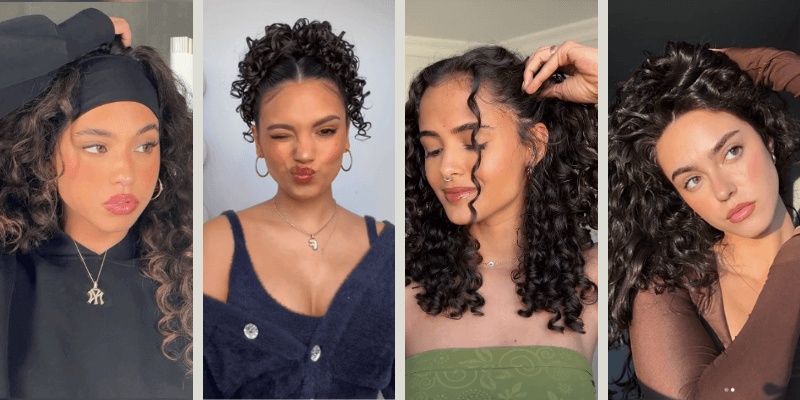
Styling natural hair every single day is exhausting — especially when most tutorials online show 45-minute routines that somehow require three different curl creams and a diffuser. Real life doesn’t work like that. What actually works is learning a handful of styles that protect your curls, don’t require hours in front of the mirror, and still look intentional when you walk out the door.
This guide covers practical, everyday natural hairstyles — including protective options, styles for short hair, beginner-friendly techniques, and how to get definition without gel. Every tip here comes with specifics, not vague advice.
How to Style Natural Hair
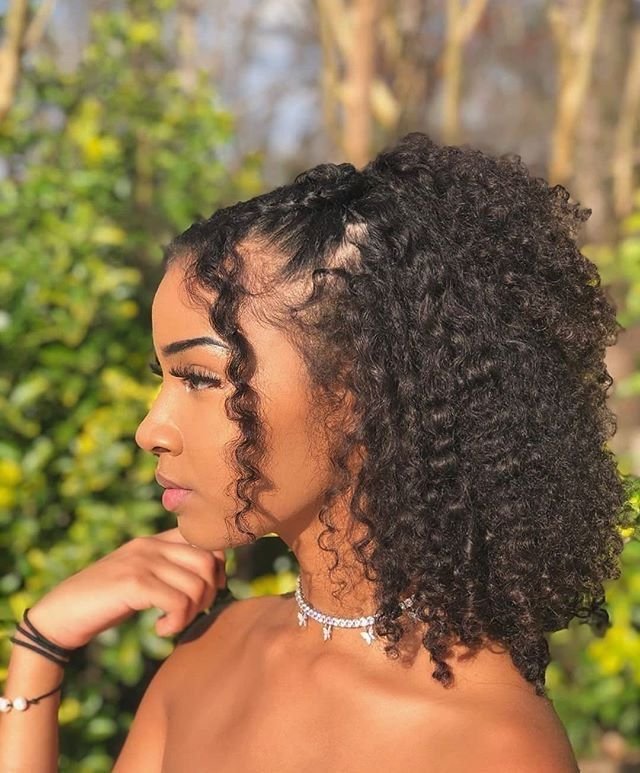
Most styling problems start before the actual styling begins. If your hair is dry or poorly moisturized, no twist-out, braid, or updo is going to look right for long. Natural hair loses moisture faster than chemically relaxed hair, and styles set on dry hair tend to frizz and shrink unevenly within hours.
The LOC method still works. Apply a liquid (water or a water-based leave-in), then an oil (sealing oil like jojoba or castor), then a cream (butter-based styler). This sequence locks in moisture before styling and is the single most effective step for curl definition that lasts.
The LOC method is a three-step hair care technique designed to maximize moisture retention for curly, coily, and textured hair by layering products from lightest to heaviest: Liquid (or Leave-in), Oil, and Cream. This method seals in hydration to prevent dryness, reduce frizz, and keep hair soft and defined for several days.
Fine or low-porosity hair
For fine or low-porosity hair, the LOC method can feel heavy. Try the LCO order instead — liquid, cream, then oil — so the oil seals without weighing the curl down. High-porosity hair (often color-treated or heat-damaged) absorbs everything fast, so the original LOC order works best.
Natural Hair Protective Styles for Everyday Wear
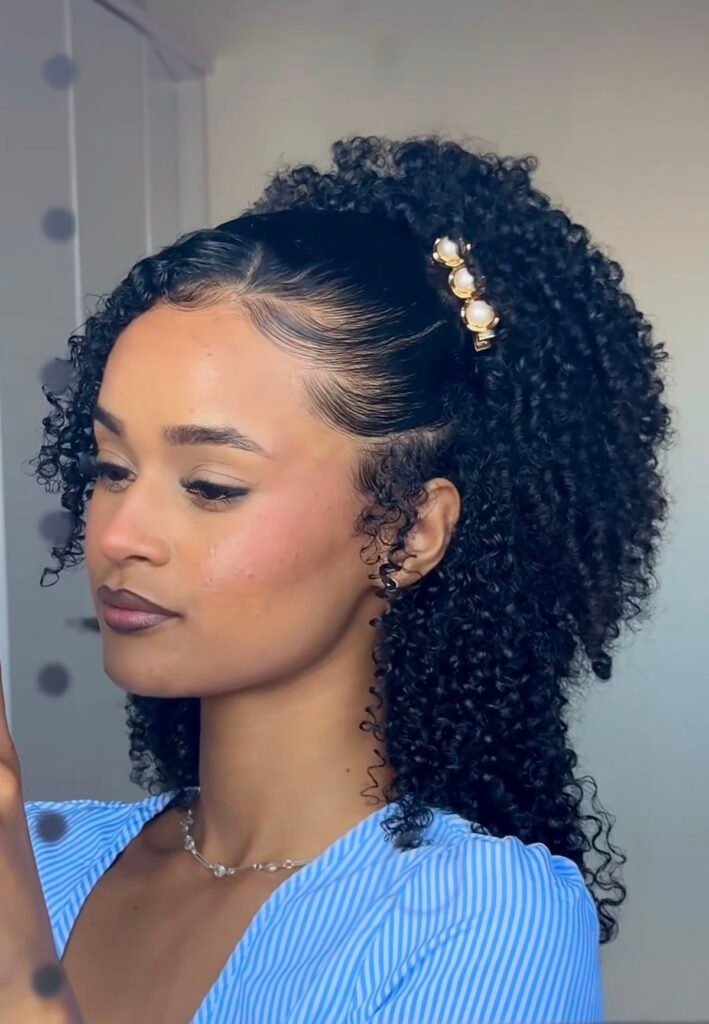
Protective styles reduce manipulation, which reduces breakage. The goal is to tuck the ends of your hair away and give your strands a break from daily combing and restyling. Here are the most practical ones for everyday life — not just special occasions.
Classic Half Up Half Down With Loose Curls
This style works across every curl type — wavy (2b–2c) through springy (3b–3c) — because the curls in the down section create volume and movement without any extra effort.
The biggest issue is the top section sliding out. Freshly washed hair is too slippery to grip. Style on second or third day hair instead, or hit the top section with a light texture spray before gathering. Use a wide scrunchie or claw clip over a thin elastic — it distributes hold evenly and actually stays put. Two bobby pins pushed horizontally through the gathered section after securing will keep it in place all day.
For the down section, scrunch upward with a microfiber towel to revive curls. Fingers only — no brush on dry curls.
Natural Hair With Headband
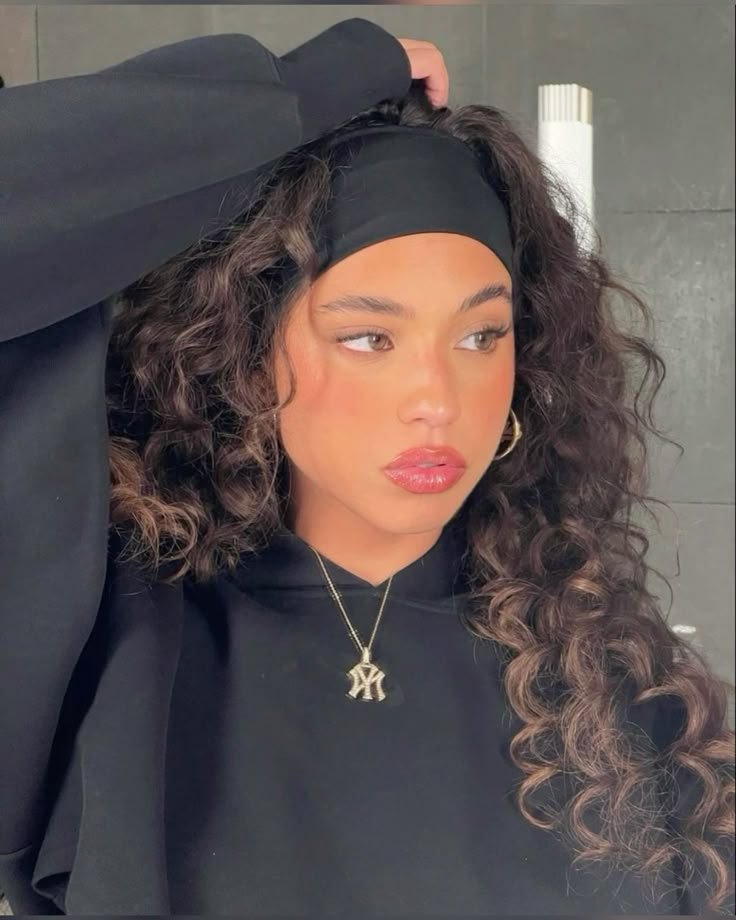
This gets underestimated constantly. A thick satin or stretchy headband placed 1–2 inches back from the hairline, with hair either pulled back or left out, is a genuinely quick everyday natural hairstyle that also protects the edges from friction and environmental exposure.
→ Avoid hard plastic headbands — the tension creates breakage spots on whatever section sits under the band. Opt for wide fabric, velvet, or satin-lined bands.
→ Pull hair through the headband with fingers instead of a comb for a voluminous, undone look that still appears styled.
→ Use this as a way to stretch styles. Day-3 twist-out starting to frizz? A headband pulls the front back and frames the face, making second-day hair look intentional again.
Natural Hair Updo Hairstyles
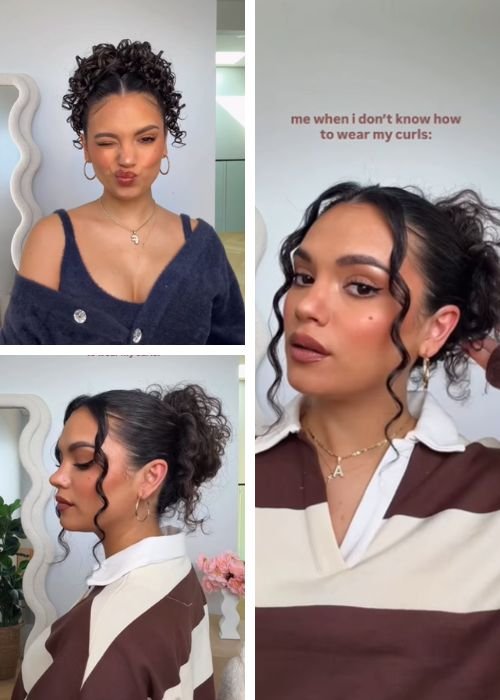
An updo on natural hair does two things at once — it protects your ends and looks polished enough for almost any setting. The key is choosing one that works with your curl pattern rather than fighting it.
The braided bun is the most practical everyday option. Cornrow the hair back in three to six sections, gather the ends at the crown or nape, and pin. It holds all day, requires zero touch-ups, and works on every curl type from 2c to 4c.
For something softer, flat twists pinned into a low bun give a more relaxed look while still keeping ends tucked. Style on stretched or second-day hair — freshly washed shrinkage makes flat twists harder to control and neater results significantly harder to achieve.
For formal occasions, a high bun with a few face-framing curls left out is consistently the most flattering option on curly hair. Gather hair at the crown, twist or coil the ends into the base, and pin. Pull two or three small curl sections loose at the front before finishing — it softens the whole look immediately.
One rule that applies to every updo: don’t pin too tight at the edges. Tension at the hairline over time causes breakage, and no style is worth that.
Quick Styles for Short Natural Hair
Short natural hair — TWA (teeny weeny afro) through ear-length — has fewer options but several very good ones. The problem is that many guides skip TWA styling entirely. Here’s what actually works at that length.
Under 2 inches
- Finger coils for definition
- TWA with moisturized, shaped edges
- Headband + small puff at top
- Defined wash-and-go with a curl-enhancing gel or custard
2–4 inches
- Mini twist-out
- Mini puff with pinned sides
- Two flat twists across the top
- Braid-out (smaller sections = better definition)
For finger coils specifically — which give excellent definition on very short hair — apply a curl defining cream to small sections (about the width of a pencil), then wrap the section around your finger and spiral it downward. Let it air dry completely before separating. Separating too early causes frizz and undoes the coil pattern.
At short lengths, product buildup shows up fast. Use a clarifying shampoo or apple cider vinegar rinse (1 tablespoon ACV to 1 cup water) every 2–3 wash days if you notice your styles aren’t holding as well as they used to or your hair feels coated.
How to Style Natural Hair for Beginners
The biggest mistake beginners make is starting with a style that’s too advanced. Flat twists, intricate braid patterns, and multi-step updo techniques require practice. Starting there leads to frustration and the conclusion that natural hair is “too hard” — it’s not, but technique matters.
Start with the wash-and-go. It’s the foundation of natural hair styling, and learning how your hair responds to products and drying time teaches you more about your curl pattern than any other style.
Basic Wash-and-Go for Beginners
- Wash with a sulfate-free shampoo in sections to minimize tangling. Applying shampoo in a downward motion (not scrubbing in circles) reduces knots.
- Deep condition for 15–30 minutes with a protein-free conditioner if your hair is not damaged, or a balanced protein-moisture conditioner if it’s color-treated or heat-damaged.
- Apply leave-in conditioner while hair is soaking wet, section by section. Rake it through with fingers, not a fine-tooth comb.
- Apply a curl defining product (gel, custard, or cream) on top. Scrunch upward with both hands — scrunching in encourages curl formation. Don’t rub or pat.
- Air dry or diffuse. If diffusing, use the lowest heat setting and hover the diffuser under sections without moving it too much. Movement = frizz.
- Scrunch out the crunch once dry. Gels often leave hair crunchy at first. Scrunch the hair upward with dry hands to break the cast and release soft, defined curls.
This routine works for 3a through 4b hair. For 4c hair, the wash-and-go may produce a lot of shrinkage, which is completely normal — 4c hair can shrink up to 75% of its actual length. If shrinkage bothers you, try a stretched style like a twist-out instead as your beginner base style.
How to Style Long Natural Hair
Long natural hair introduces new challenges: more weight pulling on curls, more tangling, and more time required for any style. The main tool for managing long natural hair is stretching — reducing shrinkage so the hair is easier to work with and styles show more length.
→Banding is a simpler version: place multiple fabric bands down the length of each section while damp and let air dry. Remove bands when dry. Hair comes out stretched and elongated.
→For styling long natural hair, work in more sections than you think you need. With longer hair, eight sections is often more realistic than four. Smaller sections = less tangling and better product distribution.
How to Style Natural Hair at Home Without Gel
Gel is useful — it gives hold and definition — but it’s not required, and plenty of people prefer to avoid it. Gel can cause flaking (especially in hard water areas), buildup, and some people find it drying with long-term use. Here’s what to use instead.
Alternatives to gel
- Flaxseed gel (DIY, zero flaking)
- Aloe vera gel (lighter hold)
- Curl custards (cream-based, softer hold)
- Shea butter + water mix
- Marshmallow root infusion
Styles that work without gel
- Twist-outs and braid-outs
- Puffs and pineapples
- Flat twist updos
- Pinned styles with bobby pins
- Headband styles
Flaxseed gel is worth making at home if you’ve struggled with commercial gels. Bring 2 cups of water to a boil, add ¼ cup whole flaxseeds, stir constantly, and remove from heat when it reaches a gel-like consistency (about 5–7 minutes). Strain immediately through a fine mesh or cheesecloth. The result is a clear, flexible gel with zero flaking that gives real hold. It stores in the fridge for up to 2 weeks.
For styles that don’t rely on gel hold at all — twist-outs, braid-outs, and flat twist styles — the key is making sure the setting style (the twists or braids you put in) dries completely. A twist that’s 80% dry when you take it down will frizz immediately. A fully dried twist unravels clean.
Common Questions About Styling Natural Hair
How do you style natural curly hair without frizz?
Frizz on natural curly hair is almost always a moisture or technique issue. Apply all products to soaking-wet hair — not damp, wet. Dry hands on wet curls cause immediate frizz. Scrunch products in upward, not downward. Let hair dry without touching it. If frizz appears after drying, it’s usually because the hair dried too fast (try air drying instead of diffusing) or products were applied on hair that wasn’t wet enough.
How do you style natural wavy hair?
Natural wavy hair (typically 2a–2c) tends to respond well to lighter products than curlier types. Heavy creams and butters can weigh the wave pattern down. Use a lightweight mousse or a small amount of gel applied in a “prayer hands” motion (pressing hands together around sections of hair). Plopping — wrapping hair in a cotton t-shirt or microfiber towel for 20 minutes after washing — enhances wave formation before any styling product is applied.
What’s the best simple natural hairstyle for beginners?
The high puff is the most beginner-friendly simple natural hairstyle. It requires almost no technique — gather hair at the crown, secure with a satin scrunchie, and fluff. From there, the two-strand twist-out is the best next step to learn, as it teaches you about your curl pattern and product usage. Give yourself several attempts before judging results — twist-outs almost always improve with practice as you figure out the right section size and product combination for your hair.
How long do quick protective hairstyles last?
A high puff: 1–2 days. Two-strand twists: 5–7 days. Cornrows without extensions: 5–7 days. Flat twists: 3–5 days. The main factor in wear time is how well you protect the style at night. Sleeping without a satin bonnet or pillowcase shortens the life of any natural style significantly — cotton pillowcases pull moisture from the hair and cause frizz and breakage at the point of friction.
Can you style natural hair every day without damage?
Daily restyling increases manipulation, which increases breakage over time. The better approach is to choose styles with wear time built in — twist-outs, braid-outs, puffs, cornrows — and restyle once or twice a week at most. When you do touch the hair daily, use fingers instead of combs wherever possible, especially on dry hair. Fine-tooth combs on natural hair cause breakage, particularly on 4b and 4c textures. Wide-tooth or a Denman brush on well-conditioned, wet hair is safer.

Hi, I’m Maleesha, a fashion writer who focuses on practical outfit ideas for everyday wear. I share styling tips based on real-life scenarios, budgets, and comfort — not just trends.
Leave a Reply